In the world of business and startups, people throw around a lot of terms – founder, CEO, freelancer, and the two big ones: solopreneur and entrepreneur. But what’s the real difference between the two? Is one better than the other? And most importantly, which path should you take?
This guide breaks down the solopreneurs vs entrepreneurs debate in detail, so you can decide which role fits your lifestyle, goals, and business vision.

Understanding the Basics: Solopreneurs vs Entrepreneurs
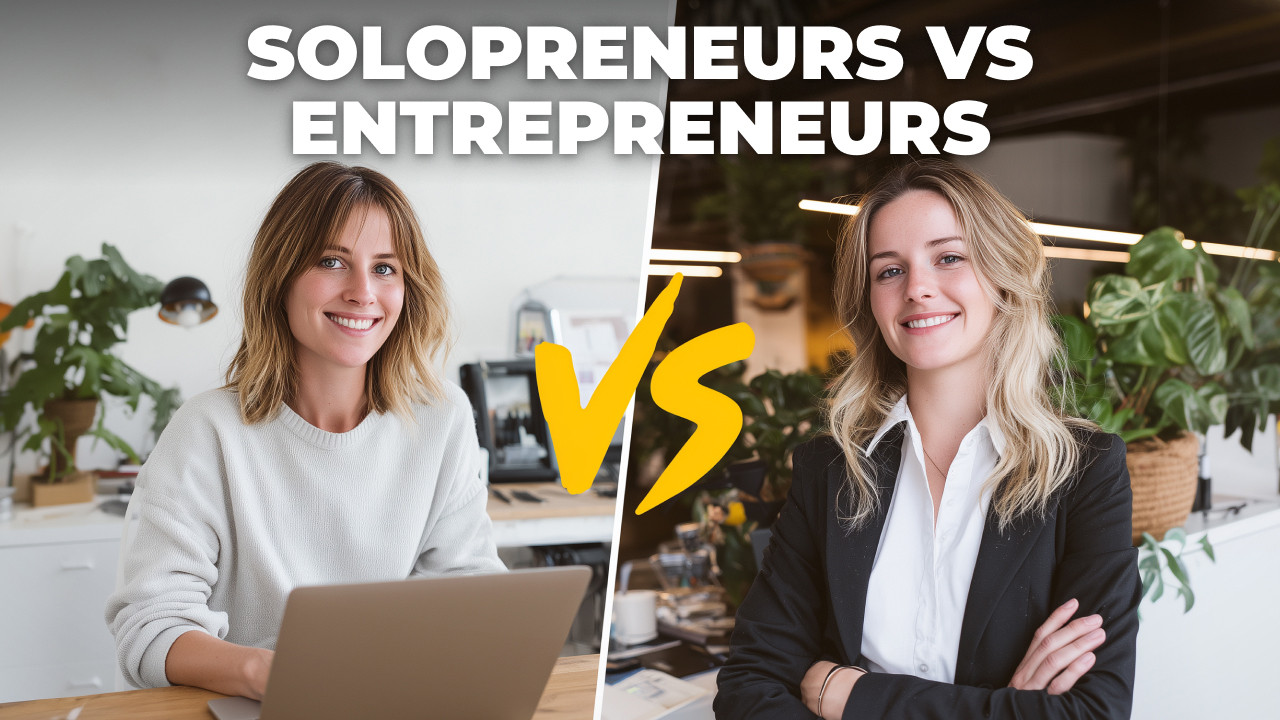
At first glance, the difference seems simple:
- Solopreneurs run their business solo.
- Entrepreneurs typically build a business with teams, systems, and growth strategies in mind.
But let’s go deeper.
A solopreneur is someone who starts, runs, and manages a business alone. They’re the CEO, marketing team, customer service, and fulfillment all in one. Think: freelance designers, online coaches, content creators, or dropshipping store owners doing everything themselves.
An entrepreneur, on the other hand, focuses on building scalable businesses, usually with the help of employees, partners, or outsourced teams. Their goal is growth, expansion, and sometimes, exit strategies like selling the business or going public.
When comparing solopreneurs vs entrepreneurs, it’s not about who’s more ambitious – it’s about business structure, workload, and vision.
Independence vs Delegation
One of the biggest differences in the solopreneurs vs entrepreneurs comparison is how work is handled.
- Solopreneurs crave independence. They want full control over every aspect of the business. They wear all the hats because they trust their own pace, skills, and creative flow.
- Entrepreneurs believe in delegation. They might start alone, but their endgame is to build a team. They know they can’t grow without letting go of certain tasks.
Key takeaway: If you love doing it all yourself, solopreneurship might be for you. But if you’re passionate about building something bigger than you, entrepreneurship may be your path.
Risk Tolerance
When diving into the solopreneurs vs entrepreneurs comparison, one of the most defining characteristics that separates these two paths is risk tolerance – the willingness to take on uncertainty in pursuit of reward.
Let’s start with solopreneurs.

Solopreneurs usually favor calculated, low-risk strategies. They tend to build lean businesses, often bootstrapping their way forward without taking loans or relying on outside investors. A solopreneur might begin with a side hustle, like a dropshipping store or digital service and only scale once they’ve proven the model. They prefer staying in control, minimizing liabilities, and maintaining flexibility. Their approach to risk is grounded in caution, self-reliance, and sustainability.
For example, a solopreneur using Sellvia to start a store can pick from proven best-selling products, use done-for-you marketing materials, and keep expenses low – all without hiring help or spending big upfront. This low-barrier entry model suits the solopreneur’s mindset: test, validate, and grow at your own pace.
Entrepreneurs, however, typically embrace higher levels of risk and often, they do so intentionally. When comparing solopreneurs vs entrepreneurs, this is where the contrast sharpens.
Entrepreneurs often go all-in early. They might pour capital into branding, hire staff from day one, or chase rapid scale even when the outcome isn’t guaranteed. Many seek outside funding, through investors, loans, or crowdfunding, to fast-track their vision. Their strategy often includes expanding operations quickly, entering competitive markets, and building infrastructure with long-term growth in mind.
The solopreneurs vs entrepreneurs distinction is especially evident in how each handles financial risk. Solopreneurs may spend cautiously and reinvest only what they earn. Entrepreneurs might budget aggressively, betting big for bigger returns. One builds with stability in mind, the other with scalability.
That’s not to say one is right and the other is wrong. Both solopreneurs and entrepreneurs take risks, but the type and timing of those risks are drastically different. Solopreneurs generally opt for slow, smart growth. Entrepreneurs often push for fast, strategic expansion.
In the broader solopreneurs vs entrepreneurs discussion, your tolerance for risk will directly impact your decisions around budgeting, business models, marketing spend, and how much uncertainty you’re willing to face.
So ask yourself:
- Are you comfortable playing the long game and growing organically?
- Or do you thrive under pressure and want to scale fast, even if it means bigger risks?
Knowing your risk profile is key to choosing your lane in the solopreneurs vs entrepreneurs landscape.
Scalability and Growth
Scalability, the ability to grow without being held back by internal limitations, is one of the most important aspects to consider in the solopreneurs vs entrepreneurs conversation. Both solopreneurs and entrepreneurs aim to grow their businesses, but the methods, mindset, and speed of that growth are often very different.
Let’s start with solopreneurs.
Solopreneurs typically scale their businesses in lean, agile, and independent ways. Since they work solo and usually don’t manage a team, their growth strategies are built around maximizing efficiency and income without adding too many moving parts.

Here’s how solopreneurs usually scale:
- Increasing rates or prices once they’ve established credibility or built a strong brand
- Automating repetitive tasks like email marketing, order fulfillment, and customer support using tools and platforms
- Selling digital products, such as eBooks, courses, or printables, that can generate passive income without ongoing manual effort
- Using ecommerce platforms like Sellvia to access ready-made stores, trending products, and automated fulfillment, all without hiring staff
In fact, when it comes to solopreneurs running product-based businesses, Sellvia plays a huge role in simplifying scalability. It allows them to expand their product range, attract more customers, and deliver fast (thanks to US-based shipping) – all while maintaining a one-person operation. This ability to scale without hiring is what makes solopreneurship so appealing to many.
Now, let’s talk about entrepreneurs.
In the solopreneurs vs entrepreneurs framework, entrepreneurs think about growth on a larger and more structured scale. Their goal isn’t just to make more money – it’s to build systems that generate revenue without their direct involvement.
Entrepreneurs often scale by:
- Building systems and teams that can handle operations, sales, marketing, and logistics
- Outsourcing and automating processes to increase efficiency while maintaining quality
- Expanding into new markets, whether that means going international, targeting different customer segments, or developing new distribution channels
- Launching multiple product lines or services to diversify revenue streams and reduce dependence on a single offer
The key difference in the solopreneurs vs entrepreneurs debate is the growth engine. For solopreneurs, the growth engine is themselves plus automation. For entrepreneurs, the growth engine includes people, systems, and capital investment.
Entrepreneurs also tend to look at scalability through the lens of long-term expansion. They want their business to grow in a way that’s sustainable with or without their direct involvement. This might mean onboarding employees, hiring agencies, setting up advanced CRM systems, or even seeking investors to fuel faster growth.
But that doesn’t mean solopreneurs can’t scale – it just means they do it differently.
When comparing solopreneurs vs entrepreneurs, think of it this way:
- A solopreneur’s growth might involve automating a dropshipping store with Sellvia, creating a digital product library, and outsourcing customer service, but staying lean and independent.
- An entrepreneur’s growth might involve hiring a team to run marketing campaigns, launching three new stores at once, and building a brand that operates without their daily input.

Both can scale successfully. But the solopreneur optimizes for freedom and simplicity, while the entrepreneur builds for volume and enterprise-level reach.
In the long run, scalability depends on your goals. If you’re happy running a highly profitable solo venture that supports your lifestyle, solopreneurship might be your ideal. But if you dream of building a business empire, leading a team, or eventually selling your company, the entrepreneur route is your lane.
The solopreneurs vs entrepreneurs distinction becomes most obvious here – when you decide how big you want your business to become, and how involved you want to be in scaling it.

Time Commitment
Both solopreneurs and entrepreneurs work hard, but they often have different relationships with time.
Solopreneurs may work more hours initially since they’re doing it all themselves. But many aim to create flexible lifestyles and passive income through smart systems (like dropshipping stores or digital products).
Entrepreneurs invest time into long-term growth. They may work less “in” the business and more “on” the business – managing people, strategy, and expansion.
In the solopreneurs vs entrepreneurs debate, consider: do you want to trade your time for freedom or build a team to free your time?
Vision and Mission
Let’s talk about purpose.
Solopreneurs are often mission-driven individuals who build businesses around personal passion, like coaching, content creation, or eCommerce niches they care about.

Entrepreneurs usually have a bigger vision that may involve serving a larger market, disrupting an industry, or creating a legacy brand.
There’s no wrong answer. But in the conversation around solopreneurs vs entrepreneurs, your long-term vision plays a big role.
Income Potential
Let’s get real – everyone wants to know which one makes more money.
In theory, entrepreneurs can scale to 7 or 8 figures faster by building teams and systems that multiply revenue.
But solopreneurs can still earn six figures or more, especially with low overhead and high profit margins. Tools like Sellvia make it easier than ever to launch a dropshipping store, automate order fulfillment, and grow without needing staff.
Solopreneurs vs entrepreneurs – both can make serious money. It depends on your strategy, product, and how much you’re willing to reinvest.
Lifestyle Design
A major reason many people lean toward solopreneurship is freedom.
Solopreneurs:
- Choose their own hours
- Work from anywhere
- Avoid meetings and office drama
- Can take breaks or pivot quickly

Entrepreneurs:
- May need to stick to more structured schedules
- Spend time managing people and operations
- Can sometimes feel “chained” to the growth machine

Again, it comes down to your personal goals. When weighing solopreneurs vs entrepreneurs, ask yourself: Do you want freedom now, or are you building something bigger that might take more time?
Tools and Platforms
Thanks to tech, it’s never been easier to be either a solopreneur or entrepreneur.
Solopreneurs lean heavily on:
- Ecommerce platforms like Sellvia
- Automation tools (email, scheduling, dropshipping fulfillment)
- Content marketing and social media
![Starting A Dropshipping Business With Sellvia In 2025 [GUIDE]](https://sellvia.com/wp-content/uploads/2022/05/cover_5-online-businesses-for-2025-min.jpg)
Entrepreneurs use:
- CRM and team management tools
- Financial planning and accounting systems
- Marketing teams and agencies
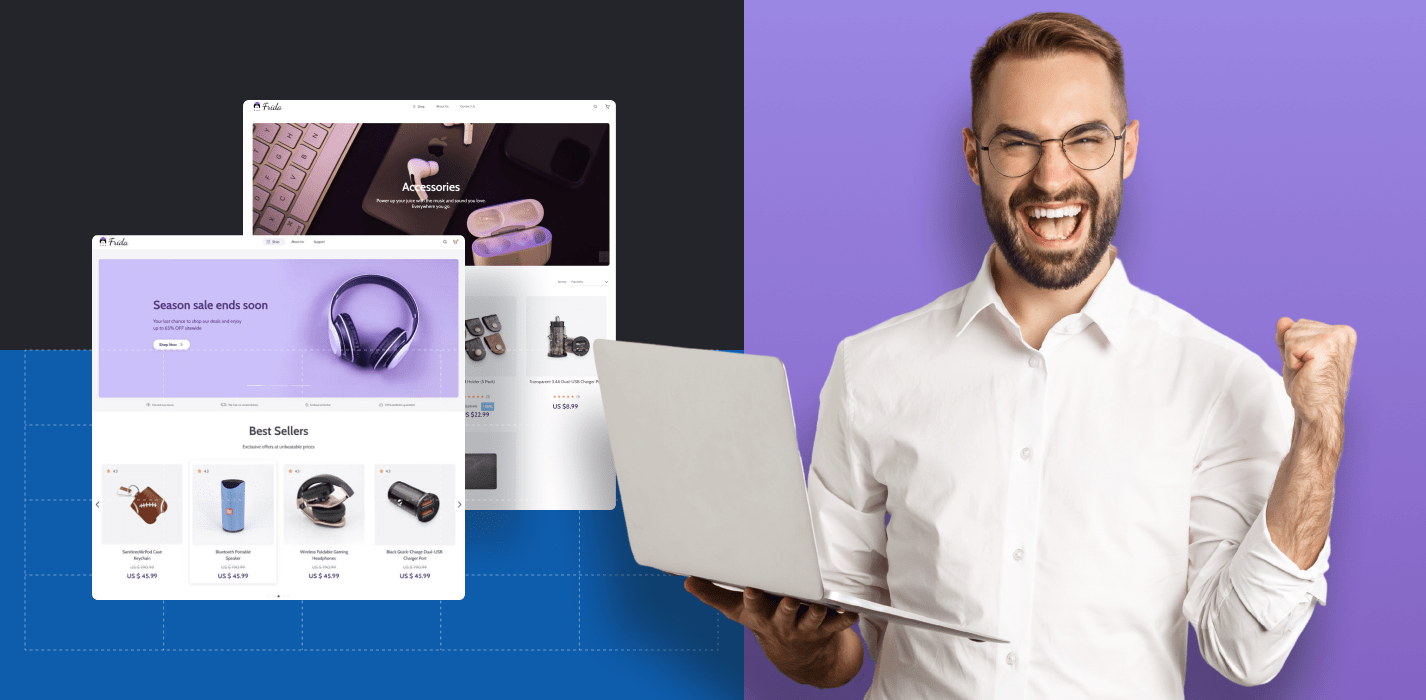
For solopreneurs especially, Sellvia offers a massive advantage: done-for-you stores, ready-made ad creatives, and automated fulfillment, so you can scale without needing a team.
Branding and Marketing
Both solopreneurs and entrepreneurs need to build brands, but they do it differently.
Solopreneurs often build personal brands around themselves. They are the face of their business, which builds trust and connection.

Entrepreneurs usually create company brands that can grow without their name being attached.
This difference affects your content, positioning, and long-term strategy. If you’re unsure which route is for you, look at your comfort level with being visible vs being behind the scenes.
Which One Should You Be?
Let’s settle the solopreneurs vs entrepreneurs debate once and for all: you don’t have to pick just one forever.
Some of the most successful entrepreneurs today started as solopreneurs. They learned the ropes, built income, and eventually scaled into full-blown companies. Others stay solo for years and enjoy the freedom of a one-person business.
Ask yourself:
- Do I want to work alone or build a team?
- Am I focused on freedom, or do I want to grow a big company?
- What kind of risk am I comfortable with?
Your answer to the solopreneurs vs entrepreneurs question might change over time and that’s okay.
Sellvia Makes It Easy for Both
Whether you identify more as a solopreneur or an entrepreneur, one thing is clear: you need tools that work.
That’s where Sellvia comes in.
If you’re a solopreneur, Sellvia helps you:
- Launch a store with zero tech skills
- Choose from thousands of trending US-made products
- Use done-for-you marketing tools (email templates, SEO blogs, TikTok videos)
- Automate fulfillment and shipping, so you don’t need to hire help
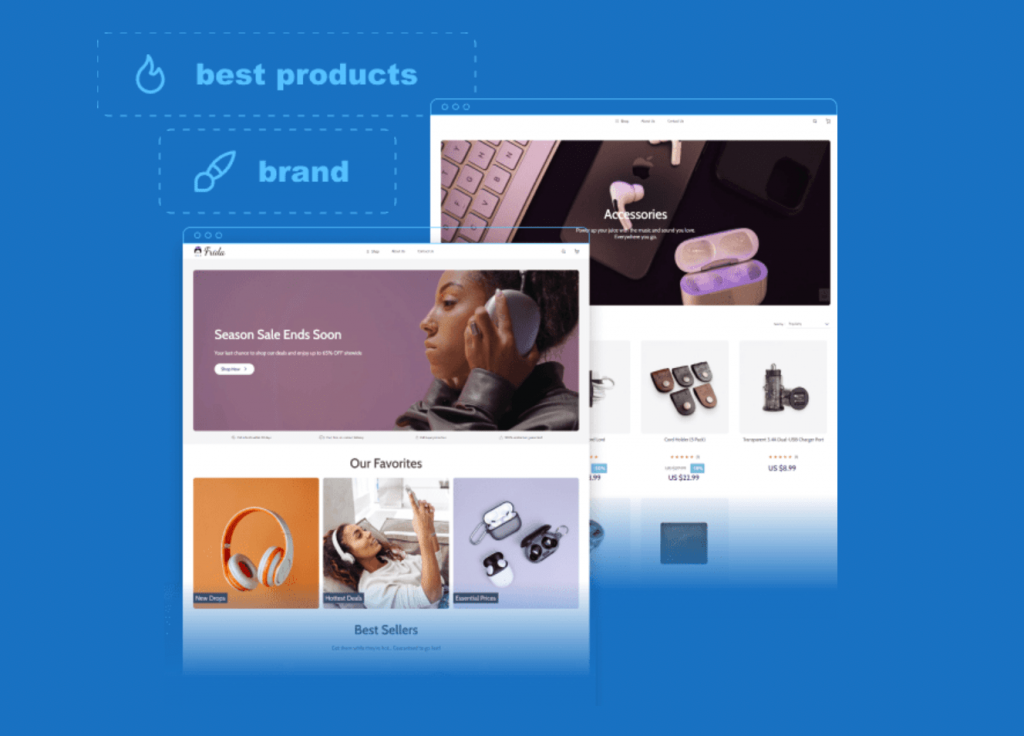
If you’re an entrepreneur, Sellvia helps you:
- Test product ideas fast
- Build multiple stores or product lines
- Get marketing support without hiring a team
- Scale your ecommerce operations in the U.S. with speed and confidence
Final Thoughts: Solopreneurs vs Entrepreneurs in 2025
In 2025, the line between solopreneurs vs entrepreneurs is blurrier than ever.
Thanks to automation, outsourcing, and platforms like Sellvia, you can run a profitable online business solo or scale it with a team, depending on your goals.
Whether you want to work from a laptop at the beach or launch a full-fledged ecommerce empire, the tools are at your fingertips.
Ready to Start?
No matter where you fall in the solopreneurs vs entrepreneurs debate, your journey starts with action.
Launch your Sellvia store today and take the first step toward building a business you love – solo or with a team behind you.
You’ll get a ready-to-go online store, hot products, and all the marketing tools you need to grow. Plus, new users get $100 to start.
If you were unsure about starting your online business, now is the perfect time to take the big step. The ecommerce market is booming, and there’s never been a better time to get started. So, take that first step, explore your options, and start your journey towards becoming a successful online entrepreneur!